I. Reading Canada: A Study *Teacher’s Copy*

Facts:
Geographic Size: 9,984,670 km2
Population: 35,000,000 Canadians
Currency: Canadian dollar ($/CAD)
Gross Domestic Product (GDP): +$40,000
Average Household Income: +$65,000
Political System: multi-party parliamentary system
within a constitutional monarchy
Founding Principle: peace, order, and good government
Motto: “from sea to sea”
The name Canada comes from the St. Lawrence Iroquoian word kanata, meaning "village" or "settlement".
Canada is the world's second largest country by area but its population, at slightly less than that of the state of California, is small by comparison. Canada's largest cities are Toronto, Montreal, Vancouver, Ottawa and Calgary. Even with its small population though, Canada plays a large role in the world's economy and is one of the largest trading partners of the United States.
The Land & Resources
Canada’s industry and land uses vary based on region. The eastern portion of the country is the most industrialized but Vancouver, British Columbia, a major seaport, and Calgary, Alberta are some western cities that are highly industrialized as well. Alberta also produces 75% of Canada’s oil and is important for coal and natural gas.
Canada’s resources include nickel (mainly from Ontario), zinc, potash, uranium, sulphur, asbestos, aluminum and copper. Hydroelectric power and pulp and paper industries are also important. In addition, agriculture and ranching play a significant role in the Prairie Provinces (Alberta, Saskatchewan and Manitoba) and several parts of the rest of the country.
Demographics
Canada has one of the highest per-capita immigration rates in the world, driven by economic policy and family reunification, and is aiming for between 240,000 and 265,000 new permanent residents in 2012, a similar number of immigrants as in recent years. In 2010, a record 280,636 people immigrated to Canada. New immigrants settle mostly in major urban areas like Toronto and Vancouver.
Canadian Superlatives:
Longest Coastline
Canada's coastline is the world's longest at 243,792 km or 151,485 miles (including the coastline of the country's 52,455 islands.)
Longest Undefended and Open Border
The 8,893 km (5,526 miles) border between the U.S. and Canada, which includes 2,477 km (1,539 miles) with Alaska, is the world's longest undefended border.
Highest Tides
The tides in Nova Scotia's Bay of Fundy are the highest in the world. The rise and fall is 20 to 40 feet in some places.
Oldest Rocks
The world's oldest rocks have been found near Yellowknife, Northwest Territories and are about 4 billion years old.
Longest National Highway
The Trans-Canada Highway (using the Perth-Peterborough-Parry Sound route) is 7,604 km (4,725 miles), the longest national highway in the world.
Largest Trade Relationship
US – Canada: +$500 billion between both nations (U.S. - Mexico = $ 236 billion / U.S. - Japan = $ 170 billion)
Best Hockey Nation
Canada!
II. Vocabulary & Definitions
- population
the people who inhabit a territory or stateThe population of Canada is approximately 35 million.
- principle
a basic generalization that is accepted as true and that can be used as a basis for reasoning or conductAn economic principle is: "Every action has a cost."
- motto
a favorite saying of a sect or political groupNike's motto is: “Just do it.”
- area
the extent of a 2-dimensional surface enclosed within a boundaryCanada is the world's second largest country by area but its population, at slightly less than that of the state of California, is small by comparison.
- trade
the commercial exchange (buying and selling on domestic or international markets) of goods and servicesEven with its small population though, Canada plays a large role in the world's economy and is one of the largest trading partners of the United States.
- natural resources
resources (actual and potential) supplied by natureCanadian prosperity has had much to do with its vast natural resources.
- industry
the organized action of making of goods and services for saleCanada’s industry and land uses vary based on region.
- vary
become different in some particular way, without permanently losing one's or its former characteristics or essenceDoes price elasticity vary with economic growth?
- prairie
a treeless grassy plainIn addition, agriculture and ranching play a significant role in the Prairie Provinces (Alberta, Saskatchewan and Manitoba) and several parts of the rest of the country.
- province
the territory occupied by one of the constituent administrative districts of a nationCanada is divided into ten provinces and three territories.
- demographic
a statistic characterizing human populations (or segments of human populations broken down by age or sex or income etc.)Demographic economics is the application of economics to demography, the study of human populations.
- policy
a plan of action adopted by an individual or social groupEconomic policy refers to the actions that governments take in the economic field.
- permanent
continuing or enduring without marked change in status or condition or placeCanada has one of the highest per-capita immigration rates in the world, driven by economic policy and family reunification, and is aiming for between 240,000 and 265,000 new permanent residents in 2012.
- resident
someone who lives at a particular place for a prolonged period or who was born thereMrs. Kim is presently a resident of Canada and a citizen of South Korea.
- similar
having the same or similar characteristicsCanada has one of the highest per-capita immigration rates in the world, driven by economic policy and family reunification, and is aiming for between 240,000 and 265,000 new permanent residents in 2012, a similar number of immigrants as in recent years.
- recent
of the immediate past or just previous to the present timeWe were told that more recent economic statistics are unavailable.
- settled
established in a desired position or place; not moving aboutCanadian history differs from American inasmuch as the government preceded those who settled Western Canada.
- urban
relating to or concerned with a city or densely populated areaNew immigrants settle mostly in major urban areas like Toronto and Vancouver.
- superlative
highest in qualityI hardly need explain that "number one" means the superlative degree.
- route
an established line of travel or accessThe Trans-Canada Highway is 7,604 kilometres long (making it the longest national highway route in the world).

III. Exercise: Match the Definitions
Use: demographic, recent, resident, settled & trade
1. ________________: someone who lives at a particular place for a
prolonged period or who was born there
2. ________________: the commercial exchange (buying and selling on
domestic or international markets) of goods and services
(trade)
3. ________________: established in a desired position or place; not
moving about
4. __________________: a statistic characterizing human populations (or
segments of human populations broken down by age or sex or income
etc.)
5. ________________: of the immediate past or just previous to the
present time
(recent)
IV. Exercise: Fill in the Gaps/Blanks
Use the following words: area, motto, policy, population, province, route, superlative & urban
1. The of Canada is approximately 35 million.
(population)
2. I hardly need explain that "number one" means the
_____________________ degree.
(superlative)
3. Canada is the world's second largest country by ____________ but its population, at slightly
less than that of the state of California, is small by comparison.
(area)
4. Economic ________________ refers to the actions that governments take
in the economic field.
(policy)
5. Nike's _______________ is: “Just do it.”
(motto)
6. Canada is divided into ten ____________________ and three territories.
(provinces)
7. New immigrants settle mostly in major ___________________ areas like
Toronto and Vancouver.
(urban)
8. The Trans-Canada Highway is 7,604 kilometres long (making it the
longest national highway _________________ in the world).
(route)
V. Exercise: Match the Picture
Use: agriculture, Bay of Fundy, ranching, Toronto & Vancouver
 _______________________
(ranching)
_________________________
(Vancouver)
 _______________________
(Toronto)
 _____________________
(agriculture)
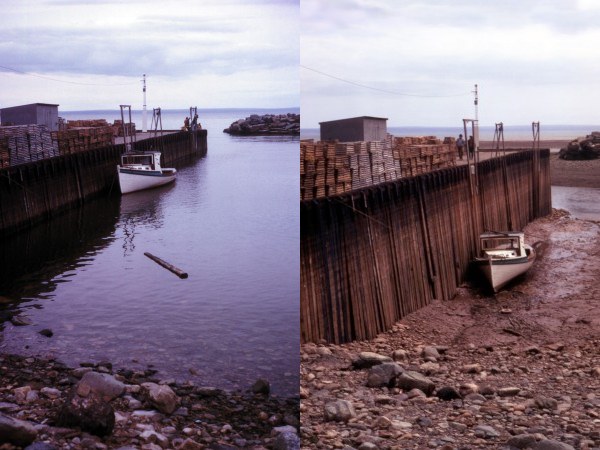 ________ ___ ___________
(Bay of Fundy)
VI. Listening: Canada - A Study

Introduction to Canada
http://www.youtube.com/watch?v=YQrTIC7T-mw
(4:30)
Dragons' Den Canada - Season 7 Episode 4 HD
http://www.youtube.com/watch?v=dWOV8q1jlbc&feature=relmfu
(43:38)
VII. Just for Fun

I AM CANADIAN
http://www.youtube.com/watch?v=BRI-A3vakVg
(1:00)
Vancouver City
http://www.canada-english.com/en/vancouver
(4:57)
THE LUMBERJACK SONG
http://www.youtube.com/watch?v=5zey8567bcg
(2:12)