In this lesson, we will explore the complex topic of human migration. People have always moved from one place to another, but today, global migration is happening on an unprecedented scale. We will look at the reasons why people move, the challenges they face, and the impact of migration on societies around the world. By the end of this lesson, you will be able to discuss this important global issue using precise vocabulary and grammatical structures.
Why Do People Migrate?
This video from Crash Course Geography explores the history and geography of human migration, using the Indian diaspora as a central case study.
Reading: Understanding Global Displacement
Look at the infographic below. It presents key data on global migration and displacement from the United Nations High Commissioner for Refugees (UNHCR). The numbers show a significant increase in forced displacement worldwide. Notice the difference between migrants, refugees, and asylum seekers. While a migrant chooses to move, often for economic reasons, a refugee is forced to flee due to persecution, war, or violence. An asylum seeker is someone who has left their home country and is seeking protection as a refugee in another. The infographic highlights that a majority of refugees are hosted in countries neighboring their own, often in developing nations. This data challenges the common perception that most refugees move to wealthy Western countries.
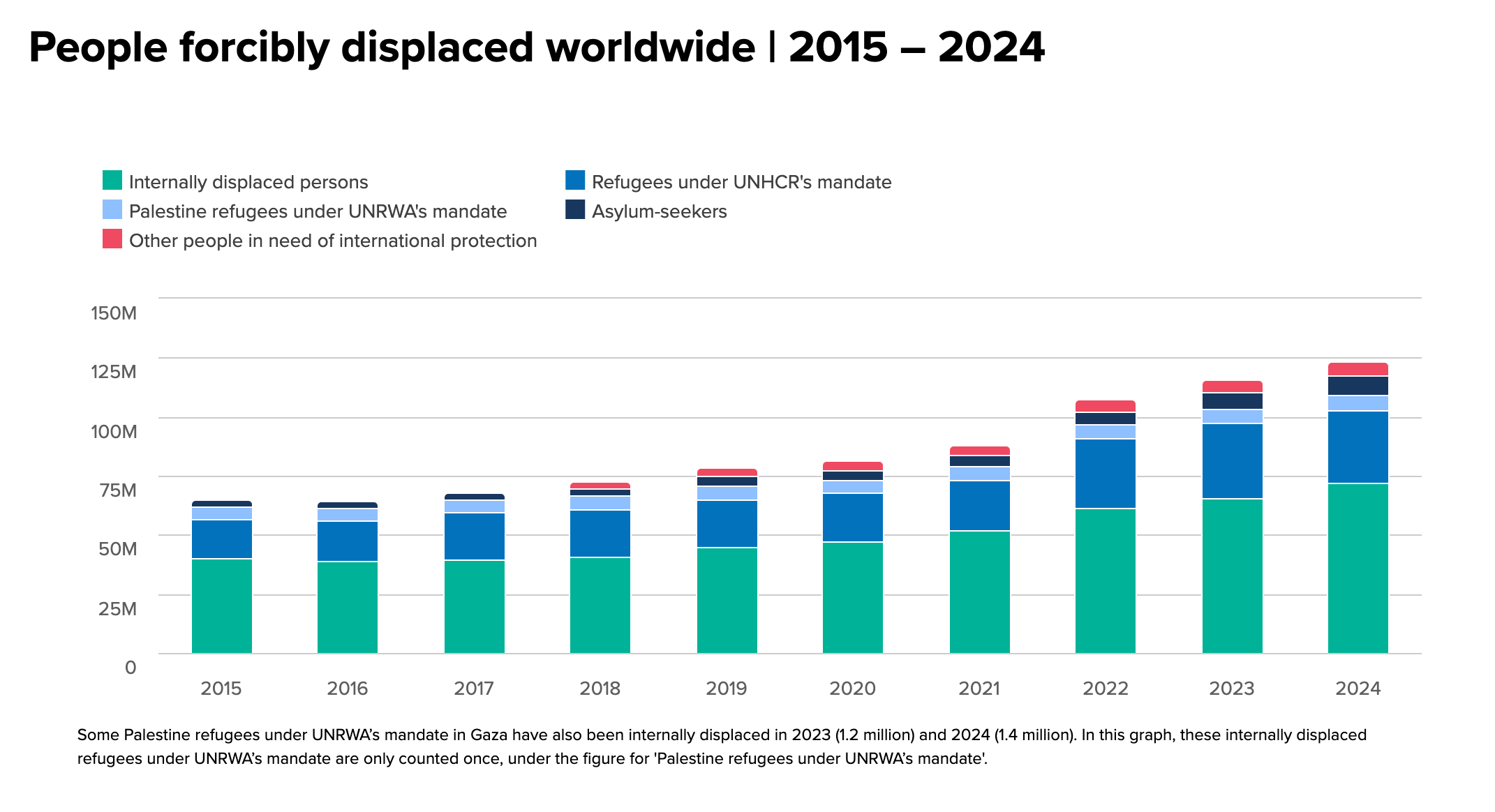
Global Displacement Trends
This infographic shows the rising number of people forced to flee their homes due to conflict, violence, and persecution.
Source: UNHCR Global Trends Report
Vocabulary
Here are some key terms for discussing migration.
| Word | Definition | Example |
|---|---|---|
|
displacement (n.) |
The forced movement of people from their home or home region. | The conflict led to the mass displacement of over two million people. |
|
asylum (n.) |
The protection granted by a nation to someone who has left their native country as a political refugee. | She applied for asylum in Canada after fleeing the political unrest in her country. |
|
border (n.) |
The line that separates one country, state, or area from another. | Due to the crisis, the country decided to close its border to new arrivals. |
|
emigrate (v.) |
To leave one's own country in order to settle permanently in another. | My grandparents decided to emigrate from Italy to the United States in the 1950s. |
|
conflict zone (n.) |
An area where violent fighting is taking place. | It is extremely dangerous for journalists to report from a conflict zone. |
|
integration (n.) |
The process by which immigrants become accepted into a society. | Successful integration policies help newcomers participate fully in the economic and social life of their new country. |
Grammar: Cause/Effect and Comparisons
Unlock full access by logging in. Registered users can explore the entire lesson and more.