Reading 3-1: Quotations
Quotations
In writing, to show that two people (or talking animals) are talking to each other, authors use quotation marks (“ “).
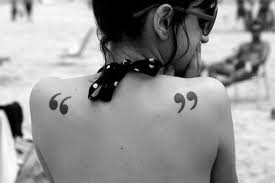
Authors also use words that mean “talk” or “ways to talk”. Many times these words are written in past tense.
| say | “I want to eat lunch now,” Dana said. |
| agree | “I also want to eat something,” Chris agreed. |
| shout | “Let’s go to Burger Hut!” Jens shouted. |
| yell | “Burger’s sound so good!” Lily yelled. |
| explain | “We can’t go there. It’s closed.” Pam explained. |
| remark | “They closed it a long time ago.” Phil remarked. |
| ask | “Why is it closed?” Dana asked. |
| sing | “I’m going hungry.” Chris sang. |
| think | “Chris always sings.” Jens thought. |
The last word think/thought is different because the character is silent. The words are in the character’s head.
Quotation Marks show that a character in the story is talking. Remember, Characters are different than the author.
(author): It was a dark and stormy night. (character): “I better bring my umbrella,” Sydney remarked. (author): Sydney took her umbrella and went out the door.
The reader knows when a character is speaking because of the quotation marks (“ ”), the character name (Sydney), and the “talk” word (in the example above, the “talk” word is remarked).