Our planet is a complex system of interconnected ecosystems, but it is facing unprecedented challenges. From the air we breathe to the water we drink, human activity has a significant impact on the environment. In this lesson, we will learn how to discuss these critical issues. You will acquire the vocabulary and grammatical structures needed to describe environmental problems and their consequences, preparing you for academic discussions and tasks like those in the ITEP exam.
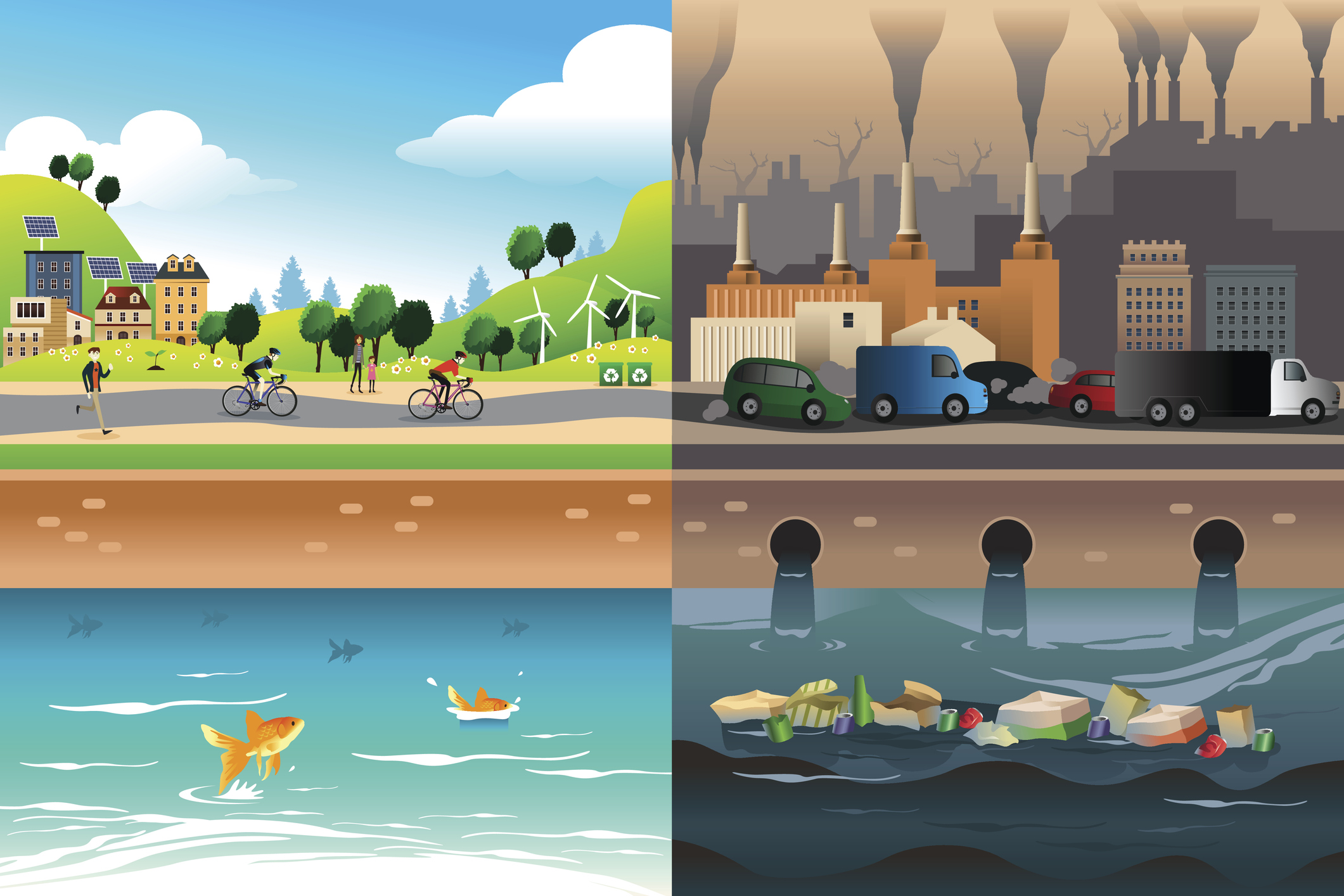
Human activity impacts the environment in both positive and negative ways.
Vocabulary Focus
To discuss environmental topics accurately, you need specific vocabulary. Study the terms below. Notice how they are used in the example sentences to describe different aspects of environmental problems.
| Word | Definition | Example |
|---|---|---|
| Emissions | The production and discharge of something, especially gas or radiation. | The government has introduced new regulations to reduce carbon emissions from vehicles. |
| Deforestation | The action of clearing a wide area of trees. | Deforestation in the Amazon rainforest has accelerated in the last decade, threatening countless species. |
| Pollution | The presence of substances that are harmful or poisonous in the environment. | Plastic pollution is a major threat to marine life. |
| Endangered | (Of a species) seriously at risk of extinction. | The Sumatran tiger is a critically endangered species due to habitat loss. |
| Biodiversity | The variety of plant and animal life in the world or in a particular habitat. | The coral reef is an area of rich biodiversity that is now being threatened by warming ocean temperatures. |
| Contamination | The action or state of making or being made impure by a poisonous or polluting substance. | The factory was fined for the contamination of a local river with industrial waste. |
Grammar Focus
When describing environmental issues, the tenses you choose and the voice you use (active vs. passive) are important for conveying precise meaning. Let's review two key grammatical structures.
Present Simple vs. Present Perfect
The present simple is used to describe facts, general truths, and ongoing, regular situations. It tells us what generally happens.
Factories release pollutants into the atmosphere. (A general truth)
The ocean absorbs a significant amount of CO2. (A scientific fact)
The present perfect (have/has + past participle) is used to describe actions that started in the past and continue to the present, or actions that happened at an unspecified time in the past but have a result in the present. It connects the past with the present.
Human activity has caused the planet’s average temperature to rise. (An action that started in the past and its effect continues).
Scientists have documented a significant loss in biodiversity. (A past action with current relevance).
Passive Voice for Effects
In academic and scientific writing, we often want to focus on the effect of an action rather than who or what performed the action. The passive voice is perfect for this. It is formed with a form of the verb ‘to be’ + past participle.
The focus is on the recipient of the action.
Active: Industrial waste contaminates the river.
Passive: The river is contaminated by industrial waste. (Focus is on the river).
The passive is also common with the present perfect to describe recent events with ongoing consequences.
Active: Deforestation has destroyed large areas of wildlife habitat.
Passive: Large areas of wildlife habitat have been destroyed by deforestation. (Focus is on the habitat).
Reading Input
Unlock full access by logging in. Registered users can explore the entire lesson and more.